Section 196 - Driving Without Insurance Law in India: Penalty, Jail & Seizure Rules
Motor vehicle insurance is not optional in India. Section 196 of the Motor Vehicles Act makes it illegal to drive or allow a vehicle to be driven without valid motor insurance.
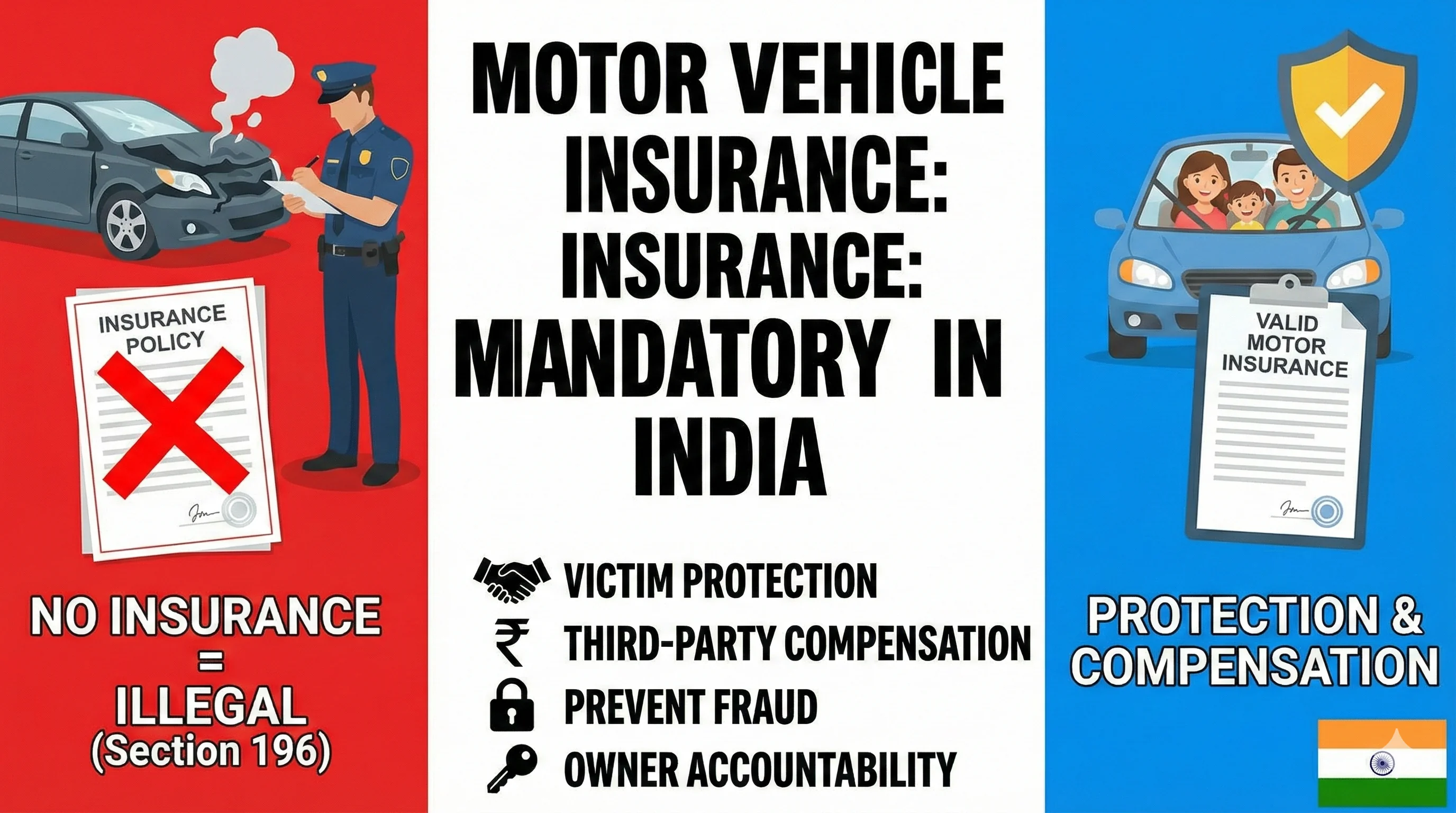
This law exists to:
- Protect accident victims
- Ensure third-party compensation
- Prevent financial fraud and evasion
- Fix accountability on vehicle owners
Driving without insurance is treated as a serious legal offence, not a paperwork mistake.
This page explains:
- What Section 196 means
- Who is legally responsible
- Penalties for first & repeat offences
- Vehicle seizure and court process
- How insurance affects accident claims
Last Updated: 2026
(As per Motor Vehicles Act, 2019 & enforcement rules)
What Is Section 196 of the Motor Vehicles Act?
Legal Meaning (Simple Language)
Section 196 applies when:
- A vehicle is driven without a valid motor insurance policy, or
- The owner allows someone else to drive an uninsured vehicle
The offence applies even if no accident occurs.
➡ Parent law reference: Motor Vehicles Act, 2019.
Is Motor Insurance Mandatory in India?
Yes.
Under Indian law:
- Third-party insurance is compulsory
- Applies to all motor vehicles
- Required before vehicle use on public roads
Driving without insurance is punishable even for short distances.
Punishment Under Section 196 (Latest)
| Offence | Penalty |
|---|---|
| First offence | ₹2,000 fine or up to 3 months jail |
| Second offence | ₹4,000 fine or up to 3 months jail |
| Court involvement | Possible |
| Vehicle action | Detention or seizure |
⚠ Courts may impose both fine and jail in serious cases.
Who Is Responsible - Driver or Owner?
| Situation | Liable Person |
|---|---|
| Owner driving uninsured vehicle | Owner |
| Someone else driving owner's vehicle | Owner + Driver |
| Commercial vehicle | Owner / Operator |
This is why owners must never allow uninsured vehicles on road.
Can Police Seize Vehicle for No Insurance?
Yes.
Traffic police can:
- Detain the vehicle
- Issue challan
- Forward case to court
- Block vehicle usage until insurance proof is shown
➡ Traffic offence overview: Traffic Offences in India.
What Happens If Accident Occurs Without Insurance?
If an accident happens:
- Insurance claim is rejected
- Owner pays full compensation
- Criminal case may apply
- Licence may be suspended
This becomes far more serious if:
- Injury or death is involved
- Drunk driving is also present
➡ Related offence: Section 185 - Drink & Drive.
Section 196 vs Section 184 (Common Confusion)
| Section | Covers |
|---|---|
| Section 196 | No valid insurance |
| Section 184 | Dangerous driving |
| Both together | High-risk cases |
Police often apply multiple sections simultaneously.
Insurance Expired vs Insurance Not Carried
| Scenario | Offence? |
|---|---|
| Insurance expired | Yes |
| Fake insurance | Yes (criminal) |
| Forgot physical copy | No (if digital valid) |
| DigiLocker / mParivahan insurance | Accepted |
Can Digital Insurance Be Shown?
Yes.
Insurance documents are valid via:
- DigiLocker
- mParivahan
- Insurer's official app
Police verify insurance live through databases.
Court Process for Section 196 Cases
- Vehicle stopped
- Insurance checked
- Challan issued
- Vehicle detained (if serious)
- Court / virtual court notice
- Fine / jail decision
How to Avoid Section 196 Penalty
- ✔ Renew insurance before expiry
- ✔ Set renewal reminders
- ✔ Carry digital copy
- ✔ Never drive uninsured vehicle
- ✔ Never lend uninsured vehicle
➡ Check challan or status: Driving Licence Status.
Relationship With Other Law Pages (Internal Structure)
This page legally connects to:
Frequently Asked Questions
1.Is third-party insurance compulsory?
Yes, mandatory under law.
2.Can police seize my vehicle immediately?
Yes, especially for repeat or commercial offences.
3.Is jail common for no insurance?
Rare for first offence, but legally possible.
4.Is insurance required for two-wheelers?
Yes, for all motor vehicles.
Legal Disclaimer
This page is for informational purposes only. Penalties and enforcement may vary by state and case. Always verify with official authorities or legal counsel.