
Independent informational guide · Reviewed: August 2026
Driving Licence Rules in India: Complete Guide
https://drivinglicencedownload.app/driving-licence-rules/
Home > Driving Licence Rules > Driving Licence Rules in India
Read the official Motor Vehicles Act - India Code
Independent informational website — not a government portal. This website does not issue licences, book appointments, collect government fees or represent any government authority. Complete transactions only on official portals.
Official government sources · Independent informational website
Official
Sarathi only
Mobile
Easy to read
Updated
Aug 2026
Key Checks Before You Start
- ✓Driving test rules
- ✓Validity and renewal
- ✓How long the licence remains effective
- ✓Permanent licence and renewal guides
- ✓Suspension/cancellation
- ✓When use of the licence may be restricted
- ✓Cancelled licence guide
- ✓Basic Legal Principles
Step-by-Step Process
- 1
Step 1
Identify the exact issue: eligibility, licence class, test, validity, offence or state procedure.
- 2
Step 2
Read the relevant central Act/Rules provision or official Parivahan guidance.
- 3
Step 3
Check the concerned state transport and traffic-police notification.
- 4
Step 4
Confirm the effective date and whether a later amendment applies.
- 5
Step 5
Keep a copy of the official source used for the decision.
Informational / legal guidance
Home > Driving Licence Rules > Driving Licence Rules in India
2. Hero and CTA Copy
.webp)
Primary destination
https://www.indiacode.nic.in/handle/123456789/13700?sam_handle=&view_type=browse
Secondary destination
https://drivinglicencedownload.app/driving-licence-rules/
Trust note
Not a government website or legal representative. Verify current central and state rules.
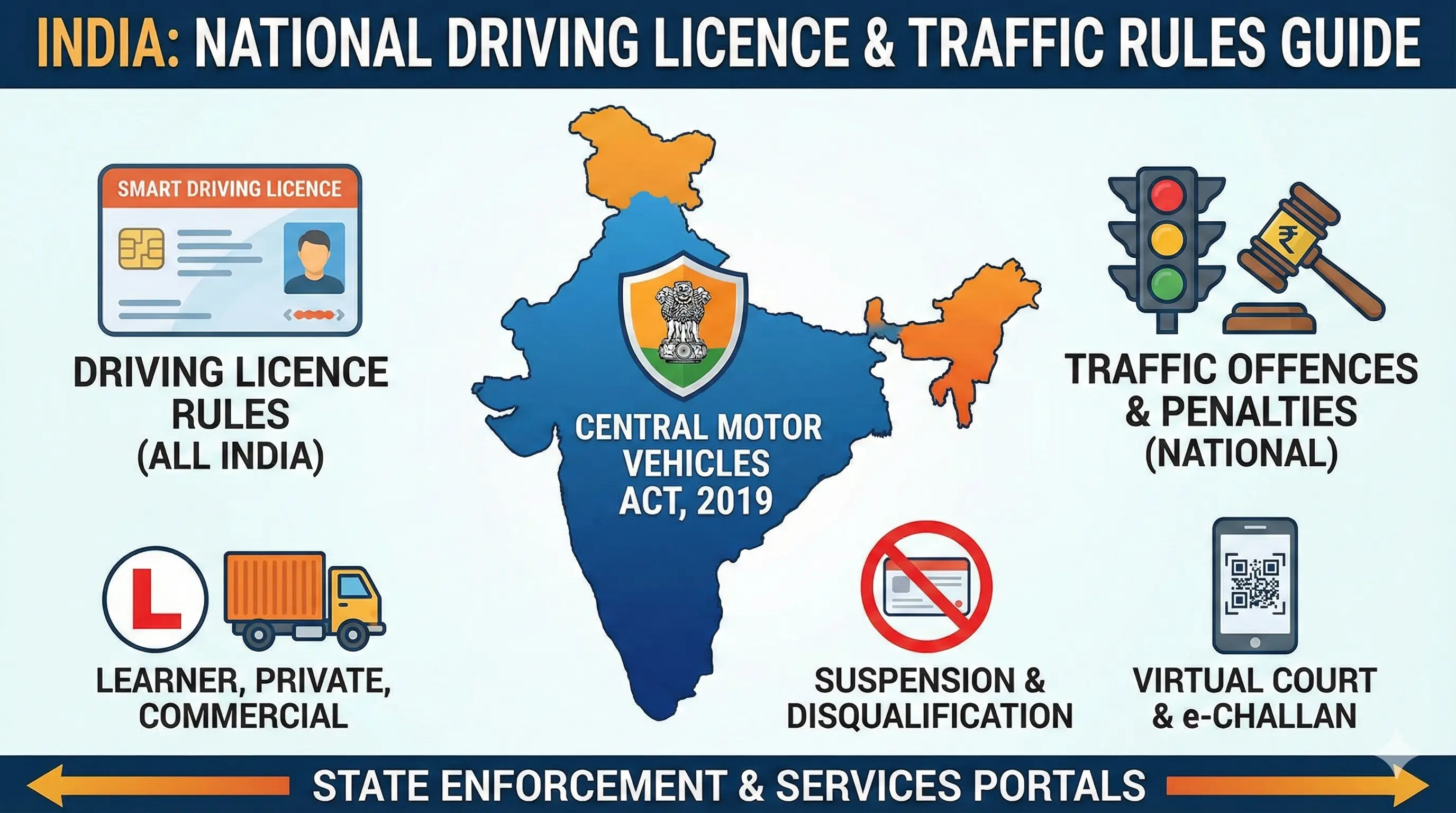
Driving licence rules in India are primarily governed by the Motor Vehicles Act, 1988, the Central Motor Vehicles Rules, 1989, later amendments and applicable state rules. The licence class, applicant age, medical requirements, test process and validity determine what a person may legally drive.
This page explains the national framework in plain language. It does not replace a state transport notification, an order issued against a licence or legal advice.
This content is general information, not legal advice. Rules, commencement dates, state procedures and compounding amounts can change. Use the official record for any decision or proceeding.
Basic Legal Principles
A person must hold an effective driving licence for the class of vehicle being driven.
The vehicle owner must not knowingly allow an unlicensed or under-age person to drive.
A learner must follow learner-specific restrictions and carry the learner authorisation.
A permanent licence generally requires a valid learner’s licence and a successful competence test.
Choose the Correct Guide
Read learning licence rules before beginning supervised practice. For the final test, use driving test rules in India. Motorcycle applicants should review two-wheeler driving licence rules, while car applicants should review car driving licence rules.
For goods/passenger vehicles, compare commercial vehicle driving rules with transport driving licence rules. International travel requires a separate International Driving Permit application.
Rules That Commonly Cause Problems
Driving a class not recorded on the licence.
Practising alone on a learner’s licence.
Using an expired learner or permanent licence.
Submitting inconsistent age/address documents.
How to Verify a Rule
- 1.Identify the exact issue: eligibility, licence class, test, validity, offence or state procedure.
- 2.Read the relevant central Act/Rules provision or official Parivahan guidance.
- 3.Check the concerned state transport and traffic-police notification.
- 4.Confirm the effective date and whether a later amendment applies.
- 5.Keep a copy of the official source used for the decision.
Frequently Asked Questions
1.Are driving licence rules the same in every state?
Central law provides the national framework, but state rules, compounding amounts, portal workflows and enforcement practices can differ. Verify the concerned state transport and police portals.
2.Can an informational website replace official legal advice?
No. Use this guide for orientation only. For a notice, prosecution, suspension, accident, insurance dispute or court matter, rely on the official record and obtain qualified professional advice where needed.
3.Where should I verify the latest rule?
Check India Code, MoRTH, Parivahan and the concerned state transport or traffic police website. The date of the notification and the state where it applies are important.
4.Can one licence cover every vehicle?
No. The authorised class or classes shown on the licence determine what the holder may drive.
5.Is a digital licence valid?
Officially issued electronic records available through approved platforms may be accepted under applicable rules; verify the current government guidance and the record status.
Related Driving Licence Guides
Official Sources
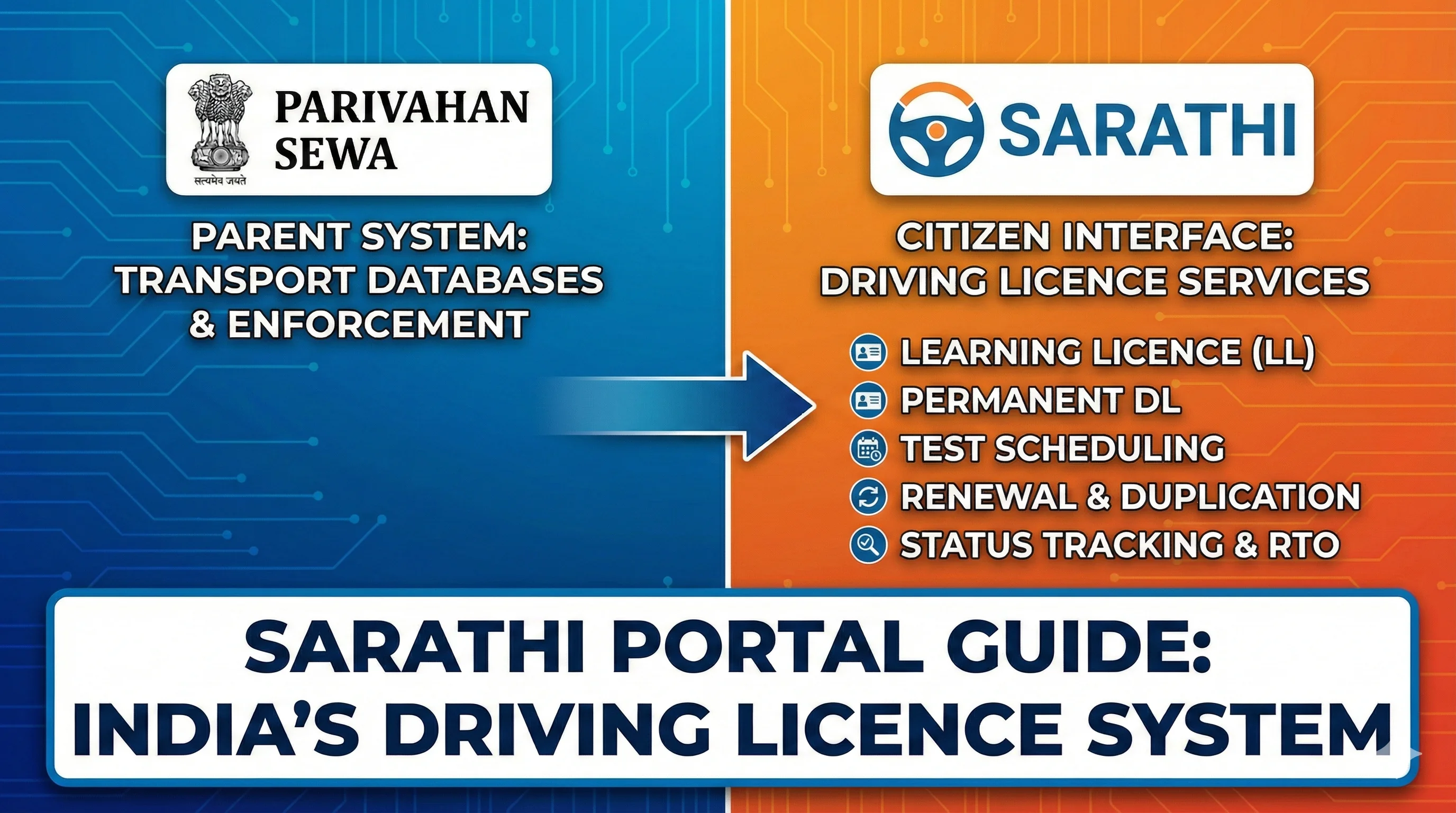
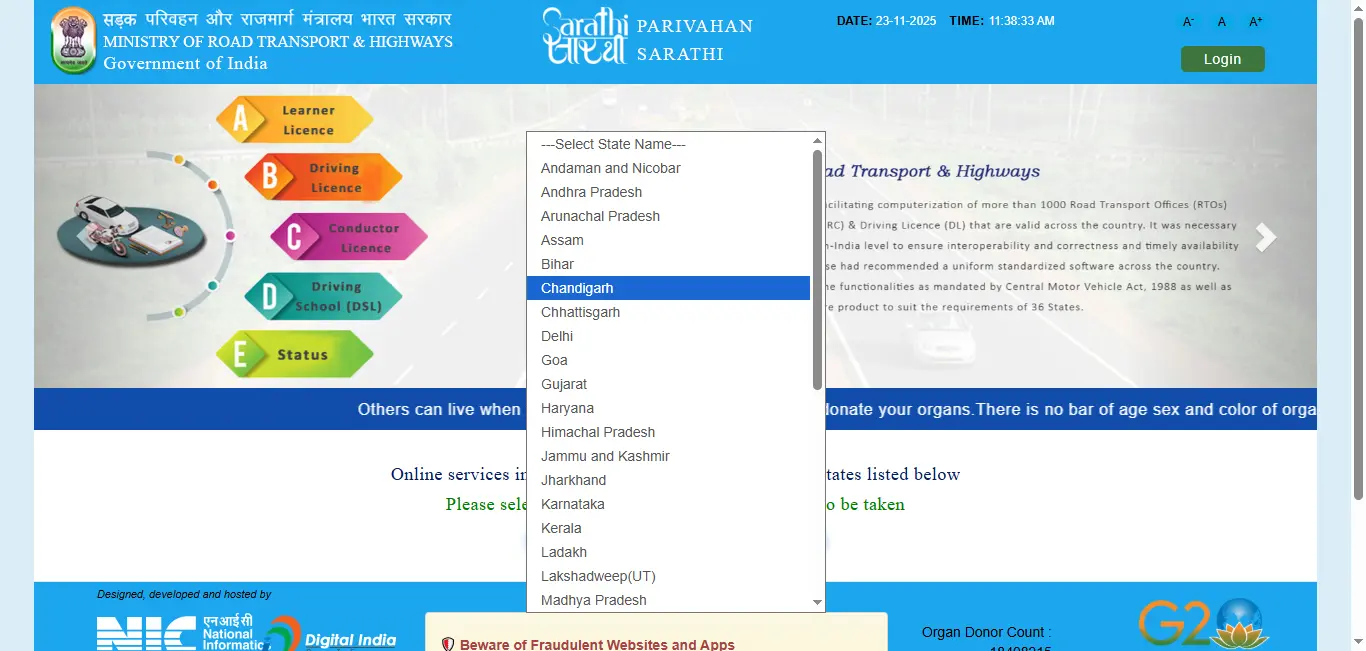
Official portal for driving-licence and learner-licence services; flow varies by state.
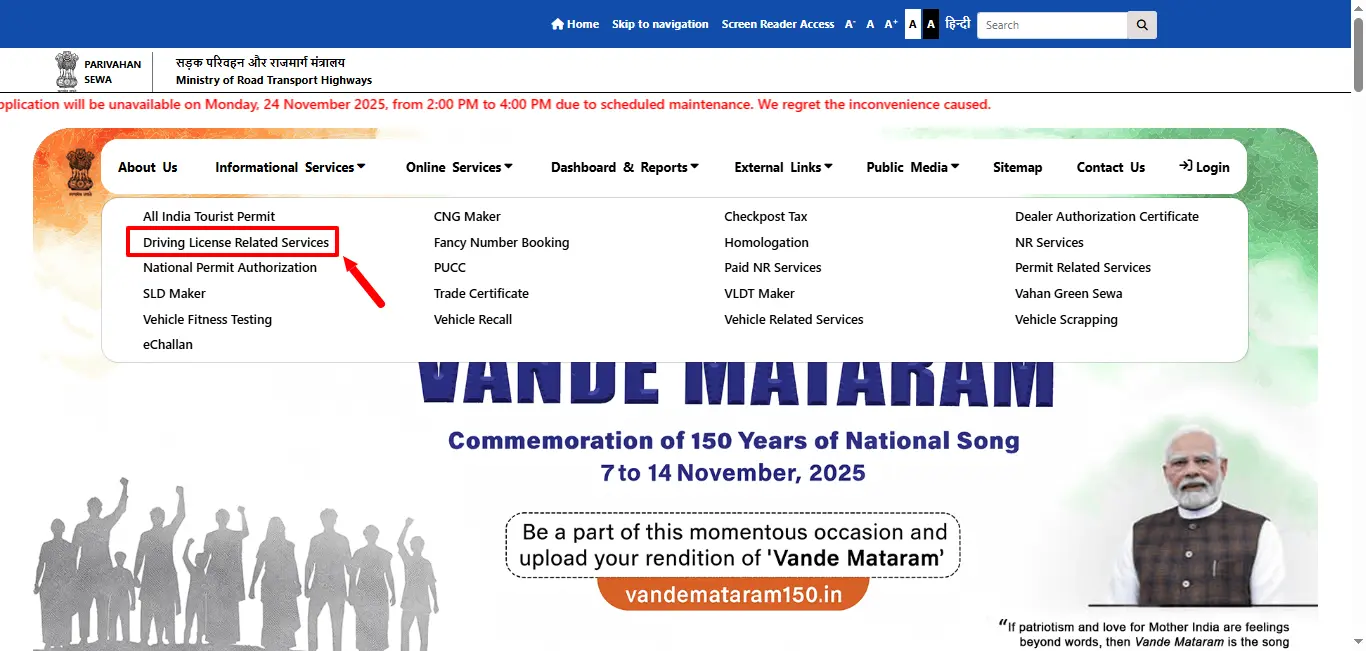
MoRTH/NIC transport-services information and official guidance.
Ministry notifications, rules and fee schedules.
Editorial disclosure
Content should be reviewed whenever MoRTH, Parivahan, Sarathi or a state transport department changes a form, fee, eligibility rule, portal flow or document requirement. Last reviewed: August 2026.