Permanent Driving Licence Rules in India - Eligibility, Test Process, Validity & Legal Conditions
A Permanent Driving Licence (DL) is the official legal authorization issued by the Regional Transport Office (RTO) that allows a person to drive a motor vehicle on Indian roads without supervision. It is issued only after the applicant successfully completes the learner licence period and passes the mandatory driving test.
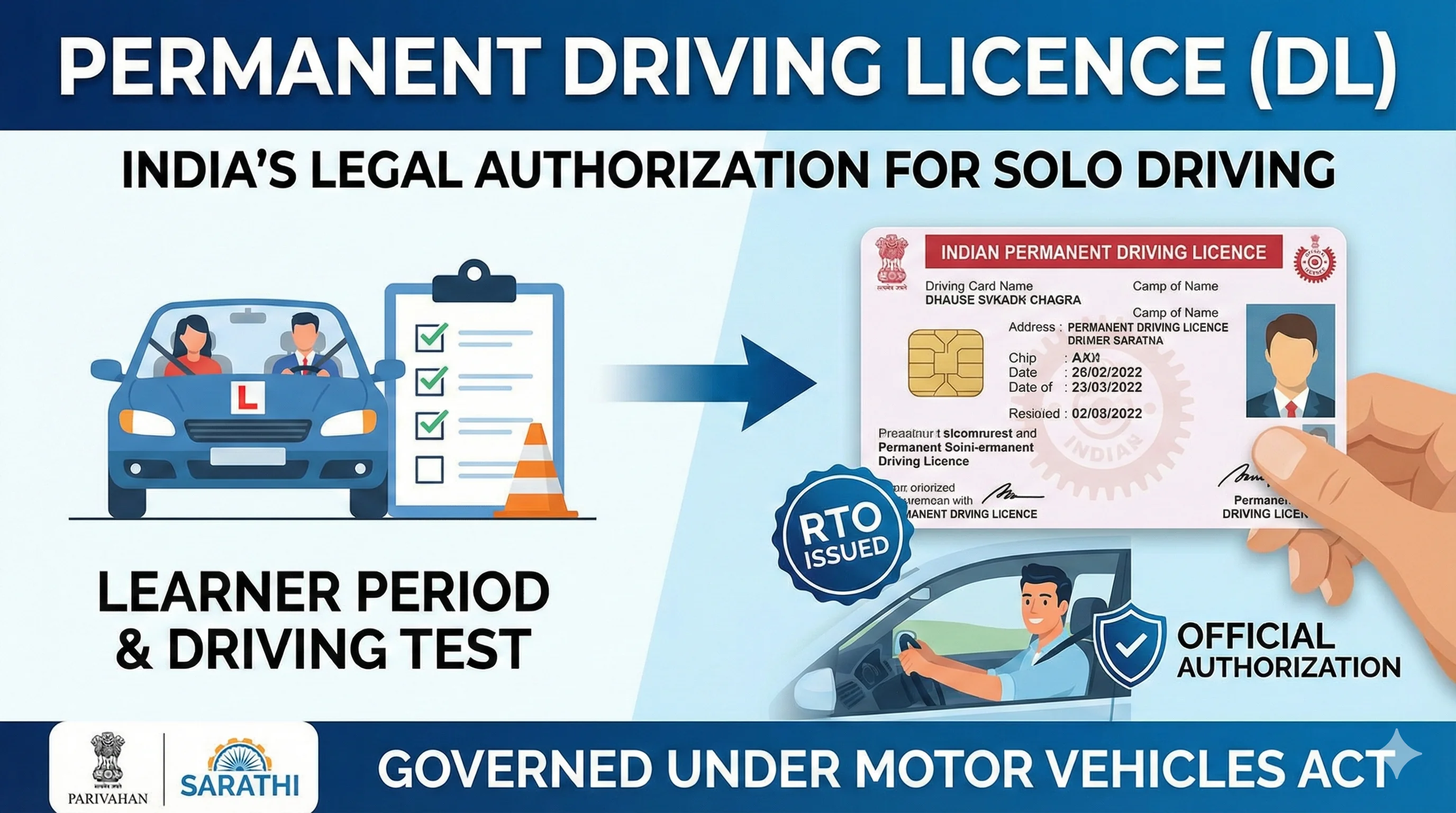
Permanent driving licence rules in India are governed under the Motor Vehicles Act, along with centralised implementation through the Parivahan and Sarathi systems.
Last Updated: 2026
(As per Motor Vehicles Act and current RTO enforcement practices)
What Is a Permanent Driving Licence?
A permanent driving licence confirms that the holder:
- Has completed the learner licence stage
- Has passed the official driving test
- Is legally allowed to drive specific vehicle categories
Driving a vehicle not endorsed on your licence is treated as driving without a valid licence under Indian law.
➡ If you are still at the learner stage, refer to rules for learning driving licence holders: Learning Licence Rules.
Eligibility Rules for Permanent Driving Licence in India
To apply for a permanent driving licence, the applicant must satisfy all of the following conditions:
- Must hold a valid learner driving licence
- Learner licence must be minimum 30 days old
- Learner licence must be within 180 days validity
- Minimum age:
- 18 years for two-wheelers and cars
- 20 years for transport/commercial vehicles
- Must meet medical and fitness standards
➡ Step-by-step process is explained here: How to apply for a permanent driving licence online.
Permanent Driving Licence Test Rules (Important)
Passing the driving test is mandatory to obtain a permanent licence.
What RTOs Evaluate During the Driving Test
- Vehicle control and balance
- Lane discipline and turns
- Use of mirrors and indicators
- Compliance with traffic signals
- Parking and reverse driving skills
- Overall road safety awareness
Common Reasons for Test Failure
- Losing control of the vehicle
- Ignoring traffic signs
- Improper braking or clutch control
- Unsafe driving behaviour
➡ If you fail the test, you can re-apply after the waiting period (details covered in driving test failure reasons in India).
Vehicle Categories Allowed on a Permanent Licence
A permanent licence is issued category-wise, not universally.
Common Categories
- Two-wheelers (MCWG / MCWOG)
- Light Motor Vehicles (LMV - cars)
- Transport / commercial vehicles
- International endorsement (separate approval)
➡ Detailed explanation available here: What vehicles you can legally drive with an LMV licence.
❗ Driving a car using only a two-wheeler licence is illegal.
Validity Period of Permanent Driving Licence
Standard Validity Rules
- Valid for 20 years or till age 50, whichever is earlier
- After age 50:
- Shorter renewal cycles
- Medical certificate may be required
Driving with an expired licence is legally treated as driving without a valid licence.
➡ Check your licence expiry and renewal status here: How to check driving licence renewal status online.
Permanent Driving Licence Renewal Rules
Permanent licences must be renewed before expiry.
Important Renewal Conditions
- Late renewal attracts additional fees
- Long-expired licences may require:
- Medical re-assessment
- Fresh driving test
- Renewal approval does not allow driving until processed
➡ Full guide available here: Complete process to renew driving licence in India.
Is Digital Permanent Driving Licence Valid?
Yes. Digital driving licences are legally accepted across India.
Accepted Digital Formats
- DigiLocker driving licence
- mParivahan app licence
Traffic police verify licences through:
- QR code scanning
- Central Parivahan database
➡ Download your licence legally from official sources: How to download your driving licence online.
Penalties Related to Permanent Driving Licence Violations
Even permanent licence holders can face strict action.
Common Offences
- Driving without licence
- Driving unauthorised vehicle category
- Repeat traffic violations
- Drink and drive cases
- Dangerous or rash driving
➡ Legal sections explained in detail here: Motor Vehicles Act sections related to driving licence offences.
Suspension or Cancellation of Permanent Driving Licence
A permanent licence can be suspended or cancelled for:
- Repeated challans
- Serious traffic offences
- Court convictions
- Juvenile driving responsibility
Suspension duration depends on offence severity and court orders.
➡ Read detailed explanation: When and why driving licences are suspended in India.
Responsibilities of Permanent Driving Licence Holders
Holding a permanent licence comes with legal responsibility.
You must:
- Drive only authorised vehicles
- Carry valid licence (physical or digital)
- Maintain valid insurance and PUC
- Never allow unlicensed persons to drive your vehicle
➡ Insurance-related penalties explained here: Driving without insurance - fines and legal consequences.
Permanent Licence vs Learner Licence (Quick Comparison)
| Aspect | Learner Licence | Permanent Licence |
|---|---|---|
| Supervision | Mandatory | Not required |
| Driving test | Not required | Mandatory |
| Validity | Short-term | Long-term |
| Legal authority | Limited | Full |
Frequently Asked Questions
1.Is permanent driving licence mandatory?
Yes. Driving without it is illegal once learner period ends.
2.Is permanent licence valid across India?
Yes, it is valid nationwide.
3.Can police seize a permanent licence?
Yes, for serious or repeated offences.
Legal Disclaimer
This page is for informational purposes only. Rules, penalties, and licence validity conditions may change as per government notifications. Always verify details through official RTO or Parivahan sources.