Car Driving Licence Rules in India - Complete Legal Guide (2026)
A car driving licence in India legally authorises a person to drive Light Motor Vehicles (LMV) such as private cars, hatchbacks, sedans, SUVs, and small vans for non-commercial use.
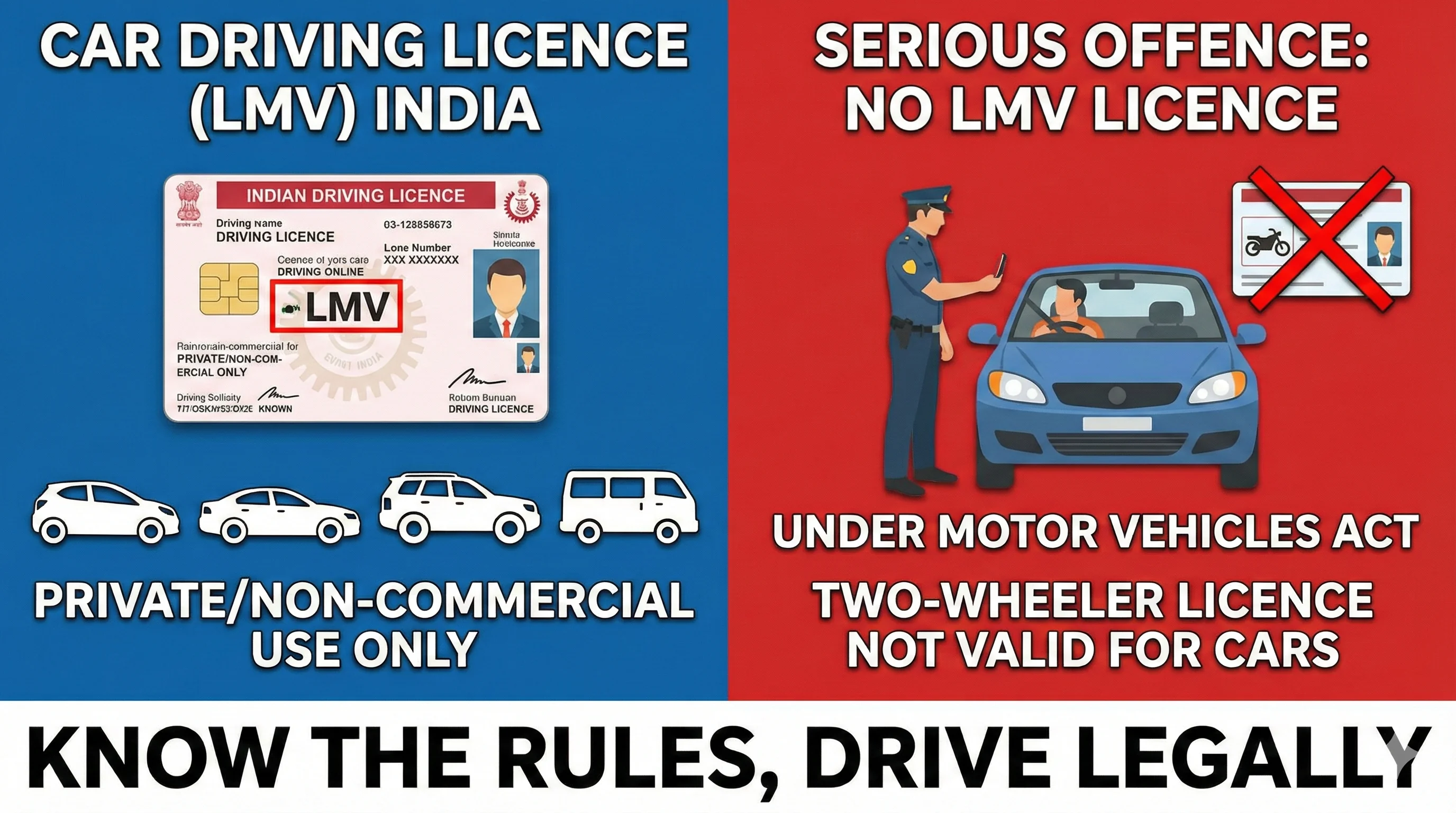
Driving a car without the correct licence category is a serious offence under the Motor Vehicles Act, even if you already hold a two-wheeler licence.
➡ If you don't have a valid licence yet, begin here: How to apply for car driving licence online.
LMV Licence Explained (What You Can & Cannot Drive)
🔹 LMV - Light Motor Vehicle
An LMV licence allows you to drive:
- Private cars
- Personal SUVs
- Non-commercial vans (below prescribed weight limit)
It does NOT allow:
- Commercial taxis
- Transport vehicles
- Delivery vehicles used for income
➡ Meaning explained in detail: What LMV means in driving licence.
Age Limit Rules for Car Driving Licence
| Age | Eligibility |
|---|---|
| Below 18 | ❌ Not allowed |
| 18+ | ✅ Eligible for LMV |
| Senior citizens | Renewal + medical fitness |
❗ Driving below legal age can trigger juvenile offence penalties.
➡ Legal consequences explained here: Juvenile driving punishment under MV Act.
Learner Licence Rules for Cars (LL - LMV)
Before applying for a permanent car licence, you must hold a learner licence for LMV.
Learner licence rules:
- "L" sign mandatory (front & rear)
- Supervisor must be present
- No highway driving (unless permitted)
- Vehicle category must match (LMV only)
Common mistakes:
- Driving alone
- Skipping "L" board
- Driving wrong vehicle type
➡ Full learner licence guide: Learning licence rules for car drivers.
Permanent Car Driving Licence Rules
A permanent LMV licence:
- Is issued after passing a driving test
- Is valid across India
- Can be suspended for violations
Key conditions:
- Licence must match vehicle category
- Renewal required after expiry
- Digital licence is legally accepted
➡ Apply after LL here: Apply for permanent driving licence.
Driving Test Rules for Cars (What RTO Checks)
During the driving test, RTO evaluates:
- Vehicle control
- Lane discipline
- Reverse & parking skills
- Traffic signal compliance
Failing the test:
- Does NOT cancel LL
- Allows re-test after waiting period
Seat Belt & Safety Rules (Strict Enforcement)
Seat belt rules apply to:
- Driver
- Front passenger
- Rear passengers (in many states)
Penalties may include:
- Fine
- Repeat offence record
- Licence action
➡ All safety penalties listed here: Traffic offences & penalties in India.
Can You Drive Commercial Vehicles With Car Licence?
❌ No.
An LMV (non-transport) licence cannot be used for:
- Taxi driving
- Cab aggregators
- Goods delivery
Commercial driving requires:
- Transport licence
- Badge endorsement
➡ Explained here: Transport driving licence rules.
Common Car Licence Violations & Penalties
| Violation | Legal Impact |
|---|---|
| Driving without licence | Heavy fine |
| Wrong licence category | Licence suspension |
| Drink & drive | Jail + fine |
| No insurance | Vehicle seizure |
➡ Relevant law section: Section 181 - driving without licence.
Digital Car Driving Licence Validity
Digital licences stored in:
- DigiLocker
- mParivahan app
Are:
- Fully valid
- Legally accepted nationwide
- Verifiable instantly by police
➡ Download your licence here: Download driving licence online.
When Can a Car Licence Be Suspended?
Suspension may occur due to:
- Repeat traffic offences
- Dangerous driving
- Drunk driving
- Accumulated challans
➡ Suspension rules explained here: Driving licence suspension rules in India.
Official Car Driving Licence Services
Frequently Asked Questions
1.Can I drive a car with two-wheeler licence?
No, it is illegal.
2.Is LMV licence valid across India?
Yes, permanent licences are pan-India valid.
3.Is medical test required?
Required for renewal after a certain age.
4.Can licence be suspended without court?
Yes, in serious or repeat offences.
Legal Disclaimer
This page is for informational purposes only. Car driving licence rules may change based on government notifications. Always verify with official RTO or Parivahan authorities.